


The Name Meant Everything
Korede. In Yoruba, it means to bring fortune, to be the carrier of blessings into a space. For a boy born on February 29, 1996, a leap-year child, a rare one, the name felt prophetic. He would perform on stages at age seven under the self-declared title African Prince, wide-eyed and completely certain that music was his kingdom to inherit. He wasn’t wrong. He just didn’t get to keep it the way anyone expected.
This is the story of Korede Bello, an honest reckoning with one of Afrobeats’ most gifted and most misunderstood talents. A young man who touched the sun at nineteen, and spent the rest of his twenties figuring out how to live with that burn.
CHAPTER ONE: THE MAKING OF A PRINCE
Lagos Born, Melody Bred
He grew up in Lagos, the city that has swallowed and spat out more dreamers than anywhere on the continent. But Lagos had no choice with Korede. He was the second child in a household where music was essentially a second language, his mother drawn to foreign sounds, his father rooted in native African rhythms. That tension, between the global and the local, would define his sound years before he ever stepped into a professional studio.
By primary school, he had already formed a music group with a friend and written his first song. By secondary school, he was recording. Not playing at it, recording. That kind of early commitment tells you something about a person. Korede wasn’t waiting for an opportunity. He was building toward one with the quiet certainty of a boy who already knew what he was.
His first single, ‘Forever’, found its way to the right ears. His manager, Casmir Uwaegbute, arranged an introduction with Don Jazzy, at the time, arguably the most important name in Nigerian music. They recorded together. Don Jazzy was impressed. On February 28, 2014, Korede Bello signed to Mavin Records. He was seventeen years old.
The Mavin Machine

Mavin Records, by 2014, was more than a label. It was an institution. Don Jazzy had built a home that turned talent into cultural phenomena, Tiwa Savage, D’banj before, and now a second generation: Reekado Banks, Di’ja, and this guitar-wielding boy with Jheri curls and a wink that would make a generation of Nigerian girls fall to pieces.
From the jump, Korede fit the Mavin brand without losing himself in it. His debut single ‘African Princess’, released almost immediately after signing, was warm, melodic, and completely his own. It crossed a million YouTube views before the ink on his contract had fully dried. But it was the Mavin all-star collaboration ‘Dorobucci’, released in May 2014, that truly introduced him to Nigeria. In the video, amid the Mavin crew at their spectacular peak, a teenager with a guitar and a signature wink stole scenes from veterans. The internet noticed. Korede Bello had arrived.
He won Most Promising Music Act to Watch at the Nigeria Teen Choice Awards that same year. The prince had been crowned, on that first tier, anyway.
CHAPTER TWO: GODWIN

‘Godwin’ was not a normal song. It was not even, strictly speaking, a song in the way we discuss songs, as a product, a release, a single. ‘Godwin’ became a national experience. A semi-gospel, pop-infused declaration of gratitude that crossed every demographic line Nigeria could draw: age, region, religion, class. Church choirs sang it. Students blasted it at graduation parties. Mothers played it at Sunday lunches. Market traders hummed it while making change. The song found every room and made itself at home.
‘Godwin’ did not make Korede Bello famous. It made him necessary.
Produced by Don Jazzy, the record carried a spiritual weight that Afrobeats rarely touched so directly. It was not a gospel song per se, but it lived in that space where joy and faith overlap, where a Nigerian who has survived another week wants to shout thanks to the sky. The song articulated that feeling better than anything before or since. It dominated radio. It dominated streaming. It spread beyond Nigeria.
The Headies 2015 gave it Best Pop Single. It was nominated for Song of the Year. MTV Africa Music Awards noted it. The nominations were almost beside the point, ‘Godwin’ had already built its own monument.
Korede Bello was nineteen years old. And then, as he would later describe it, he found himself standing inside a star that was still expanding, not quite sure what to do with all that heat.
The Weight of a Defining Song
In a remarkably candid interview years later, Korede described what ‘Godwin’ felt like from the inside. The comparison he reached for was marriage. Sudden, life-changing, identity-defining marriage, before you were ready.
“It’s like getting married at 18. Everybody is going to see me this way now, and now I have limited expression as to what I can do.”
This is the trap that defines the careers of so many artists who are touched by phenomenon records. The song becomes bigger than the person. Fans don’t want the next song, they want the next ‘Godwin.’ And that next ‘Godwin’ is, by definition, impossible. You cannot manufacture the conditions that birth a moment. You can only keep moving and hope the audience moves with you.
Korede Bello kept moving. For a while, the audience followed.
CHAPTER THREE:What He Actually Gave Us
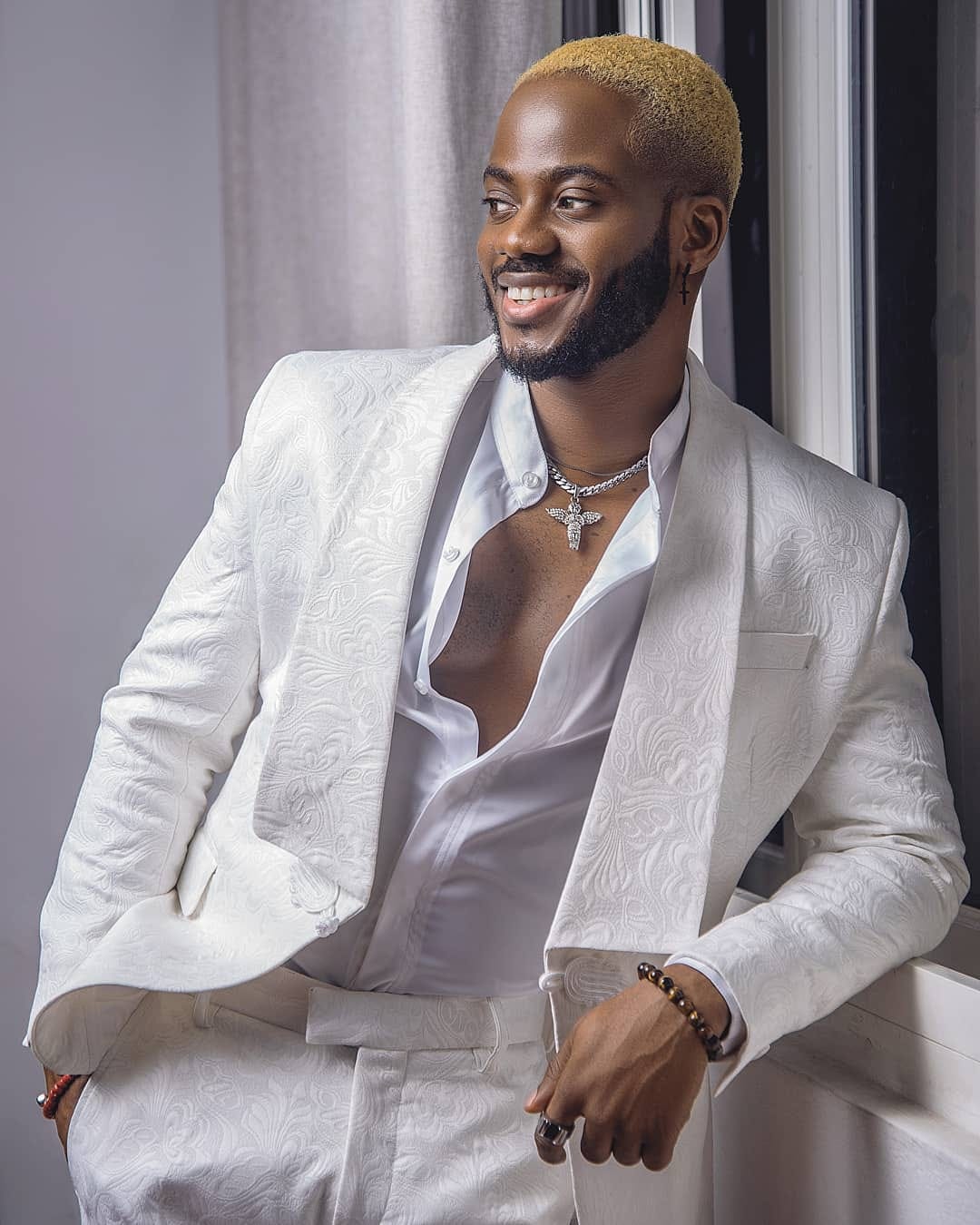
Let the record show, and it must be shown, because public memory is short and cruel, that Korede Bello was not a one-hit wonder. The narrative collapsed him into that shape, but the catalogue tells a different story.
African Princess (2014)
His debut. Warm, melodic, irresistible. It established his core sound, that blend of earnestness and groove, and proved Don Jazzy had found something rare.
Dorobucci (2014)
The Mavin crew anthem. Korede held his own among veterans. His wink became a cultural shorthand. Nigeria officially knew his face.
Godwin (2015)
The National Anthem. The record that transcended music and became a shared cultural moment. Best Pop Single, Headies 2015. An unofficial hymn for a generation.
Romantic (ft. Tiwa Savage) (2016)
A gorgeous, warm love song that showed his range. Tiwa elevated it; Korede held his own alongside one of Africa’s biggest female stars. A radio staple.
Do Like That (2016)
His longest-lasting commercial statement. Certified Gold in Canada. Certified Gold in the USA by RIAA in 2021, the highest certified digital single for Mavin Records at the time. A genuinely global record.
Mungo Park (2016)
A fan favourite that showed his playful, adventurous side. Proved ‘Godwin’ wasn’t a fluke, he could carry different energies with the same charisma.
Butterfly (2017)
From the Belloved album. A tender, melodic piece that cemented his identity as one of Afrobeats’ most emotionally literate voices.
Available (2022)
His first post-Mavin solo statement. Modest reach, but an important flag planted in the ground. He was still here.
Jejely (ft. Mr Eazi) (2023)
A laid-back, cool collaboration that reminded listeners of his instinct for melody. A quiet signal of artistic maturity.
In the peak 2014–2017 window alone, Korede Bello delivered consistently across a range that most artists twice his age couldn’t match. The question was never whether he had more in him. The question, the painful, unanswerable question, was whether the music industry, and the fanbase, would give him the space to become the full artist he clearly was.
CHAPTER FOUR: BELLOVED
The Album That Should Have Changed Everything
In 2017, Korede Bello released his debut album, Belloved. It was polished, cohesive, and ambitious. It featured some of his best work, ‘Butterfly’, ‘Romantic’, ‘Do Like That’, songs that in a different timeline might have built the mythology of a confirmed superstar. Critics responded positively. The production, largely shaped by the Mavin machine, was impeccable.
And yet. The album landed in a Nigerian music landscape that was accelerating in ways that were difficult to predict and even harder to keep pace with. Wizkid had gone global with ‘One Dance.’ Davido was establishing his international footprint. The streaming era was reshaping what it meant to be big, what a hit was, and how long any record could hold public attention. Belloved felt like a classic album released at the wrong speed.
It wasn’t a failure. But it wasn’t the coronation anyone expected. And in Nigerian music, where momentum is everything, where public memory is short, and where the next big thing arrives before the last big thing has properly settled, not-quite-coronation can feel like a step backward even when it isn’t.
After Belloved, the silence grew.
CHAPTER FIVE: THE SILENCE BETWEEN THE SONGS
When the World Stopped Calling
Between 2017 and 2021, the Korede Bello we had known, the one who seemed to be on the verge of something massive, went quiet. Not entirely absent. But quieter. In a space where quiet reads as irrelevant, that distinction barely mattered.
The industry kept moving. The 2018-2020 period was among the most explosive in Afrobeats history, Burna Boy rose to become a global phenomenon, Wizkid’s global profile expanded, a new generation of voices from Rema to Omah Lay began asserting themselves. The conversation shifted. And Korede Bello, who had once been in the thick of it, found himself increasingly on the margins of the conversation he had helped define.
It is worth pausing here, because it is easy to read this as a straightforward story of fade and failure. It is not. What Korede Bello was going through was something far more human and far less easily resolved: a young man, overwhelmed by sudden massive success at an age when most people are still figuring out who they are, trying to find his footing in an industry that rewards speed and punishes depth.
“The fear of missing out was projected on me by the outside world. It was an unhealthy desire, wanting to create another Godwin.”
He was chasing a ghost. And he knew it. The honesty with which he has spoken about this period is one of the most striking things about Korede Bello as a person, the self-awareness, the refusal to pretend the pressure wasn’t real, the clear-eyed acknowledgment that the industry’s demand for constant output clashed directly with his need to understand himself as an artist and a human being.
CHAPTER SIX: THE GREAT DEPARTURE
Leaving the Label, Finding Himself
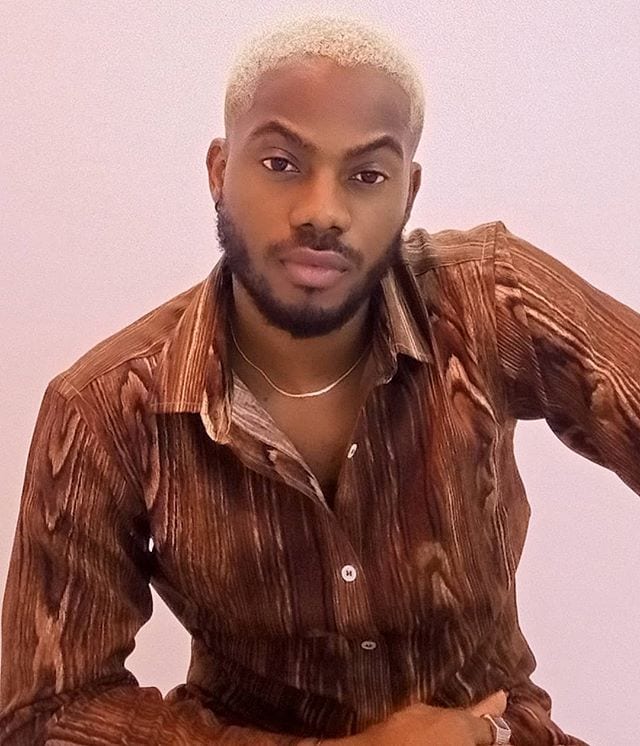
In 2021, after seven years, Korede Bello left Mavin Records. The announcement, when it finally landed, surprised few who had been watching closely. The signs had been there, the diminishing releases, the introspective social media presence, the growing distance between the artist and the label’s relentless output machine.
When Korede explained his reasons, the language he used was striking in its honesty. He spoke about feeling like a product. About the loss of self that comes from existing primarily to generate profit for an institution. About needing to reconnect with his ‘why’, the deeper reason, beneath commerce and chart positions, that he had made music in the first place.
“I started to feel like something that was being sold. You lose sight of what matters when you chase after the next song.”
There is a version of this story that frames the Mavin exit as failure. That version is wrong. What Korede Bello did was one of the harder things an artist can do at the peak of their dependency on institutional support: he chose himself. He walked away from a machine that had made him famous, because staying in it was costing him the thing that made him worth being famous for.
He founded Caspertainment, his own management banner. He partnered with ONErpm for distribution. He began, slowly, on his own terms, to rebuild.
CHAPTER SEVEN: THE PRINCE, REBORN
Koreday and the Independent Era
On March 22, 2024, timed, with characteristic poetry, to align with his February 29 leap-year birthday, Korede Bello released Koreday. Twenty-six tracks. His most personal work. His first fully self-directed album, built on the foundation of everything he had learned and shed in the years since Mavin.
The album was not a commercial explosion. It did not produce a chart-dominating single or a cultural moment on the scale of ‘Godwin.’ But that was not the point of it. Koreday was an artist document. a record of what happens when a person who was turned into a product decides to become a human being again through music. Critics acknowledged its authenticity. Long-time fans who had waited years for something from him felt the return.
Don Jazzy appeared as a guest feature, a detail that carried its own weight, suggesting that the Mavin exit had not been bitter but evolutionary. The two men had built something together, and that relationship, even after the institutional ties were severed, remained.
Korede Bello today is not the nineteen-year-old who woke up one January morning to find ‘Godwin’ playing in every corner of Nigeria. He is a twenty-nine-year-old man, born on February 29, remember, a rare person on a rare day, who has navigated the full complexity of what sudden stardom does to a young soul, and come out on the other side still making music, still holding his purpose close.
CHAPTER EIGHT: THE QUESTION WE HAVE TO ASK
Why Didn’t He Become King?
This is what the series demands we reckon with. Not in cruelty but in clarity, because understanding what goes wrong for talented people is how we learn to do better by them.
In Korede Bello’s case, several forces converged at the worst possible time. He was extraordinarily young when ‘Godwin’ hit, nineteen. The song’s scale was disproportionate to his readiness to carry it. In the same way that a physical structure can crack under a load it was not yet built to bear, Korede Bello’s artistic identity fractured slightly under the weight of being a national sensation before he had fully decided who he was.
The label system, for all that Mavin gave him, was not designed for the kind of careful, exploratory artistic growth that might have helped him build on ‘Godwin’ with something equally powerful. Labels need hits. They need them fast. That pressure pushed him toward output when he needed stillness, and when the stillness he eventually claimed looked, from the outside, like absence, public patience ran out faster than it should have.
There is also the matter of timing. The 2017-2020 window, when Korede was at his quietest, was the same window in which Afrobeats underwent its most dramatic global expansion. He was out of the room when the room became the most important room in global music. Had he been louder, more consistent, more commercially calculated during those years, he might have ridden that wave to the kind of international stature that Burna Boy and Wizkid now occupy.
But those are not the kind of choices Korede Bello has ever been built to make. He is an artist, not a strategist. And in the brutal economy of the music industry, that distinction is sometimes the only difference between a prince and a king.
He chose his art over his positioning. That is not weakness. It is just a different kind of royalty.
CHAPTER NINE: WHAT THE PRINCE LEFT BEHIND
The Real Measure of Impact
Here is what we know for certain: ‘Godwin’ is one of the ten most important Nigerian pop songs of the 2010s. Full stop. Its cultural reach, its cross-demographic resonance, its staying power, it is a record that will still be understood and felt by Nigerians who were not yet born when it came out. That is a rare thing. Most artists never make one of those.
‘Do Like That’ is gold certified in two countries. For a Nigerian artist in 2016, that was remarkable. The fact that the certification came in 2021, years after the song’s peak, speaks to a slow-burning global spread that went under-reported and under-credited at the time.
Beyond the records, Korede Bello showed a generation of Nigerian artists that you could be young and melodically gifted and spiritually grounded and not have to manufacture toughness to be taken seriously. He was soft-spoken, thoughtful, and deeply feeling, qualities that Afrobeats, in its dominant commercial presentation, doesn’t always celebrate. He made those qualities visible, and viable, and valuable. That matters.
His work with mental health advocacy, his honesty about his own psychological journey through stardom and its pressures, in a music culture that rarely makes space for that kind of vulnerability, Korede Bello has been something different. Something rarer than a hit record.
The Prince, Still Standing
Korede Bello has spent his life insisting on his own existence anyway, as an artist, as a voice, as a person who refused to stay inside the shape the industry carved for him. He is still making music. He is still growing. The throne may have gone to others, but the prince built something more durable than a crown.
He built a catalogue that will outlast the conversation about why he didn’t become bigger. He built a self, and in an industry that exists to sell you, that is the most radical act of all.
His name means to bring fortune. He brought it. He brought it to every room ‘Godwin’ ever entered, to every person who ever wept quietly to ‘Romantic’, to every fan who played ‘Do Like That’ on a road trip and felt, for four minutes, like everything was going to be alright.
The boy who sang his way to the sun did not fall back to earth. He learned to live at altitude. And that, perhaps, is its own kind of kingdom.
NEXT WEEK: Another prince. Another story. Another crown that almost was, AFROBEATS PRINCE THAT NEVER BECAME KING