
They say talent will take you to the top, but character keeps you there. It’s an adage, worn smooth by repetition, yet proven true time and again in the unforgiving spotlight of fame. You can have the voice of an angel, the stage presence of a legend, and the accolades that others spend lifetimes chasing, but if you forget the people who put you on that pedestal, the fall is swift, and the landing is hard.
History is littered with cautionary tales: brilliant artists who burnt too bright, too hot, who mistook their gift for a license to treat others poorly. The music industry, in particular, has a long memory for arrogance. Fans forgive missed notes and forgotten lyrics, but they rarely forgive being made to feel small by someone they once elevated.
Talent opens doors. Attitude determines whether you get to stay in the room.
This is a lesson that Burna Boy, Grammy winner and self-proclaimed “African Giant”, is learning in real-time, as the American leg of his tour crumbles beneath the weight of accumulated grievances and a fanbase that has finally said, “Enough.”
When the Music Stops: Burna Boy’s American Dream Turns Sour
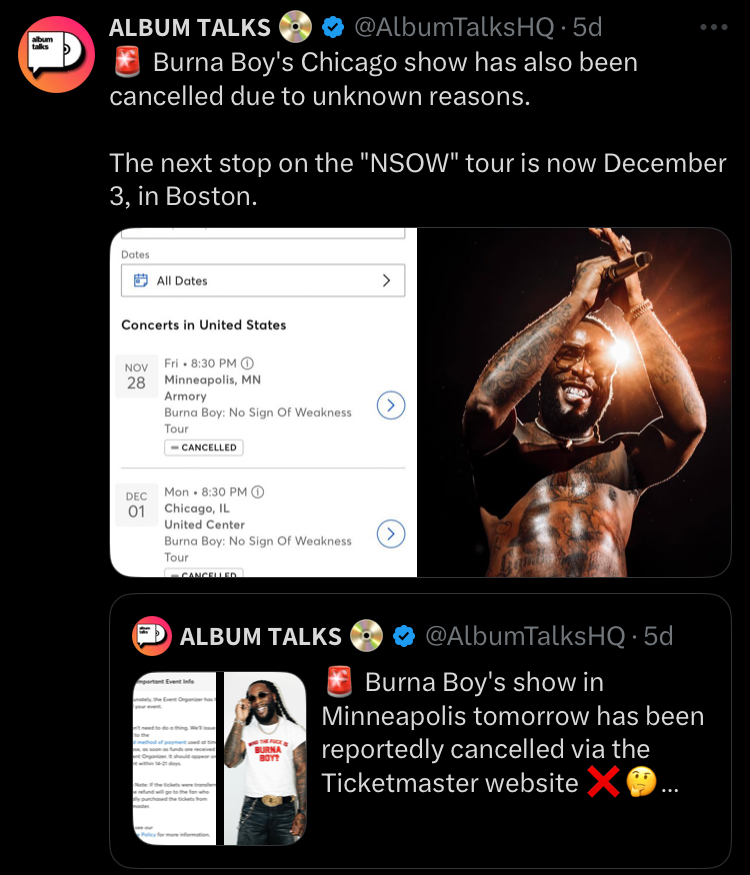
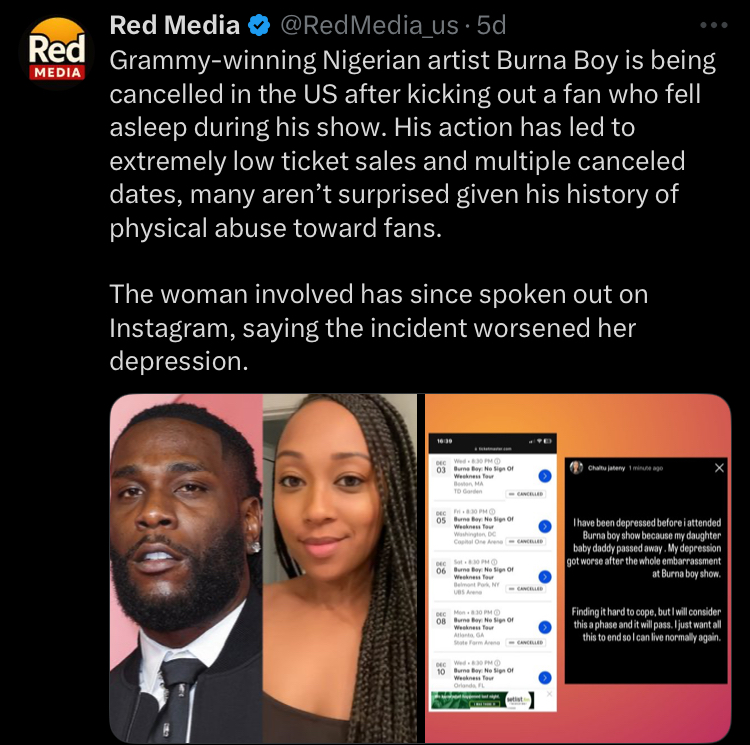
The lights dimmed in yet another American concert venue, but this time, the show wouldn’t go on. For Burna Boy, whose Grammy sits proudly on a shelf somewhere, the American leg of his “No Sign Of Weakness” tour is collapsing, and perhaps the irony of that tour name isn’t lost on anyone watching.
His voice? Undeniable. His contributions to bringing African music to global stages? Significant. His ability to craft songs that move millions? Unquestionable.
But none of that seems to matter now, because somewhere along the journey from Lagos to Los Angeles, from underground artist to Grammy winner, something fundamental was lost: the understanding that talent is a gift, but treating people well is a choice.
The Night Everything Changed
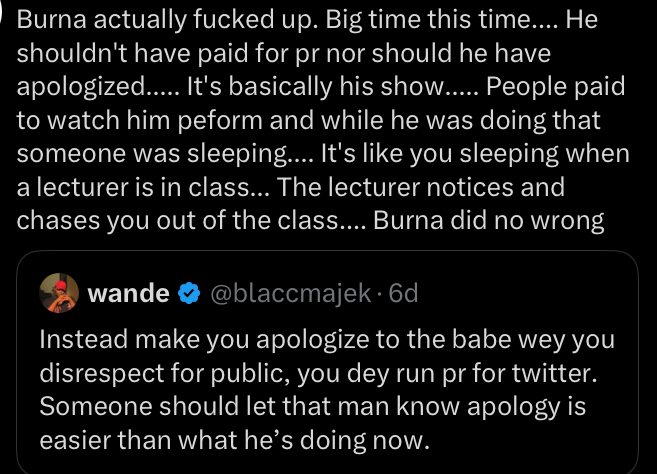
It started with something seemingly small: a tired fan, perhaps exhausted from a long day, dozed off during his performance. For most artists, this might warrant a joke, maybe a playful callout. But Burna Boy’s response was different; he had the fan removed from the venue.
The woman would later take to Instagram, her voice trembling through the pixels on our screens, explaining how the public humiliation deepened her struggle with depression. In that moment, a crack that had been forming for years finally split wide open.
The Receipts Were Already There
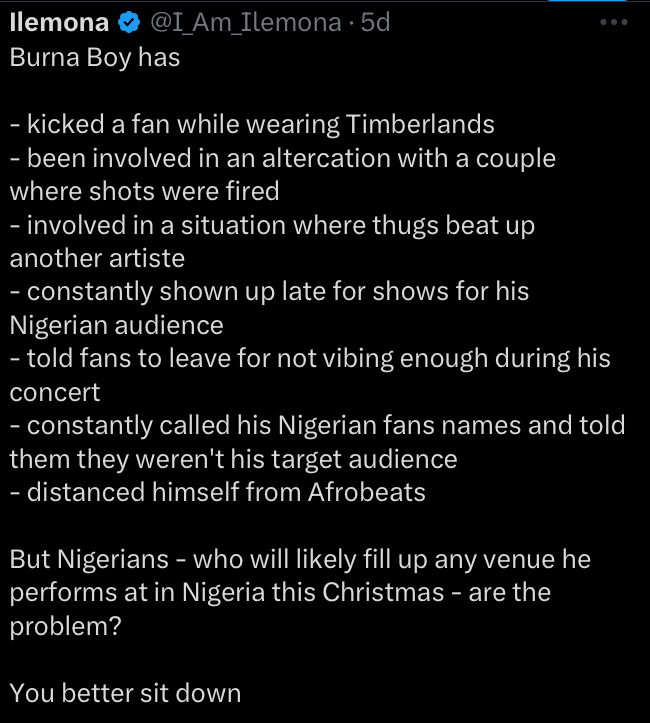
Ask any long-time follower of Burna Boy, and they’ll tell you the signs were always there, like storm clouds gathering on a sunny day. There was the fan who felt the sole of his Timberlands. There was a couple’s night out that ended with gunshots being fired during an altercation involving the artist’s entourage. There was another musician, beaten by thugs allegedly connected to Burna’s circle.
Then came the pattern that stung deeper for his Nigerian fans: the chronic lateness, the verbal dismissals, and the public statements suggesting they weren’t sophisticated enough and weren’t his “target audience”. He distanced himself from Afrobeats, the very genre that carried him to global stages, as if embarrassed by his own roots.
It was as though success had built a wall between the artist and the people who first believed in him, brick by brick, incident by incident.
The American Reckoning
Chicago was supposed to be different. Minneapolis was marked on calendars. But American audiences, known for their swift cancel culture, had done their homework. The tickets didn’t sell. The venues stayed empty. One by one, dates dropped from the schedule like autumn leaves.
“Americans boycotted an arrogant Nigerian singer,” read one viral post, the words harsh but resonating with a growing chorus of voices who’d simply had enough.
When Wizkid Showed Another Way
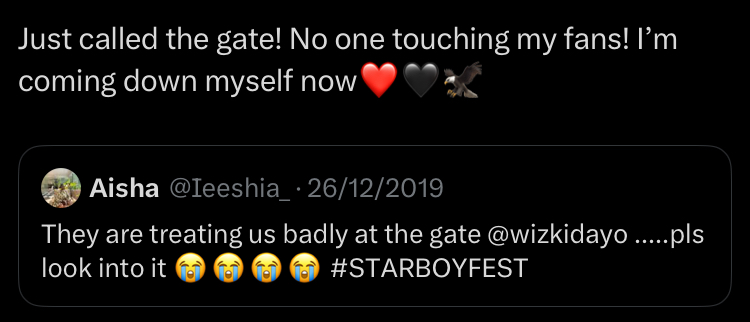
The contrast couldn’t be sharper. Scroll back to December 26, 2019, and you’ll find Wizkid, Burna’s compatriot, rival, and sometimes friend, handling a crisis in real-time on Twitter. Security was allegedly mistreating his fans.
“Just called the gate! No one touching my fans! I’m coming down myself now,” he tweeted, and you could almost hear him running.
That’s all it took. Eight words that said, ‘I see you.’ You matter. I’m here.
It’s the kind of moment fans screenshot and keep, the kind that builds loyalty stronger than any marketing campaign money can buy. Wizkid understood something fundamental: his talent got him the stage, but his treatment of fans earned him the right to stay on it.
The Unraveling

Now, whispers suggest even family ties are fraying. Reports claim Burna Boy has parted ways with his mother, who once guided his career. If true, it’s the kind of detail that transforms a professional crisis into something more tragic, a man potentially losing his way while losing his audience.
Coffee Stands and Empty Gestures

They tried the usual damage control. Coffee stands appeared at venues for concertgoers, a nice touch, perhaps, but it missed the point entirely. You can’t caffeinate away broken trust. Influencers were reportedly enlisted to post positive content, but their followers could smell the inauthenticity from miles away.
Fans don’t want free coffee. They want to be seen. They want to matter. They want the artist they fell in love with, the one who sang their struggles, their joys, their stories, to remember that they’re the reason any of this exists in the first place.
What Redemption Might Look Like
The path back, if there is one, won’t be paved with publicists’ statements or strategic Instagram posts. It will require something harder: genuine humility. A real conversation, not a performance. An acknowledgement that something sacred was broken: the unspoken contract between artist and audience.
It would mean showing up on time. It would mean protecting, not dismissing. It would mean remembering that “African Giant” is a responsibility to represent with grace.
It would mean understanding that all the talent in the world means nothing if the people who celebrate it feel disrespected, diminished, or dismissed.
The Silence That Speaks Volumes
As more tour dates vanish and the silence from Burna Boy’s camp grows louder, one question hangs in the air: will he recognise this moment for what it is: a crossroads? Or will pride keep him walking down a road that grows lonelier with each step?
The stages are empty now. The fans have voted with their wallets and their feet. And somewhere, perhaps, a Grammy sits on a shelf, gleaming but silent, unable to fill the void where connection used to live.
The irony remains: a tour called “No Sign Of Weakness” may have revealed the greatest weakness of all, forgetting who was there when the lights first came on and who deserves to be there when they shine brightest.
Because in the end, talent may be what gets you noticed, but how you treat people is what determines whether anyone still cares when you walk into the room.